
You Will Never Find Time To Be Still
Stillness will not be found. It must be made.

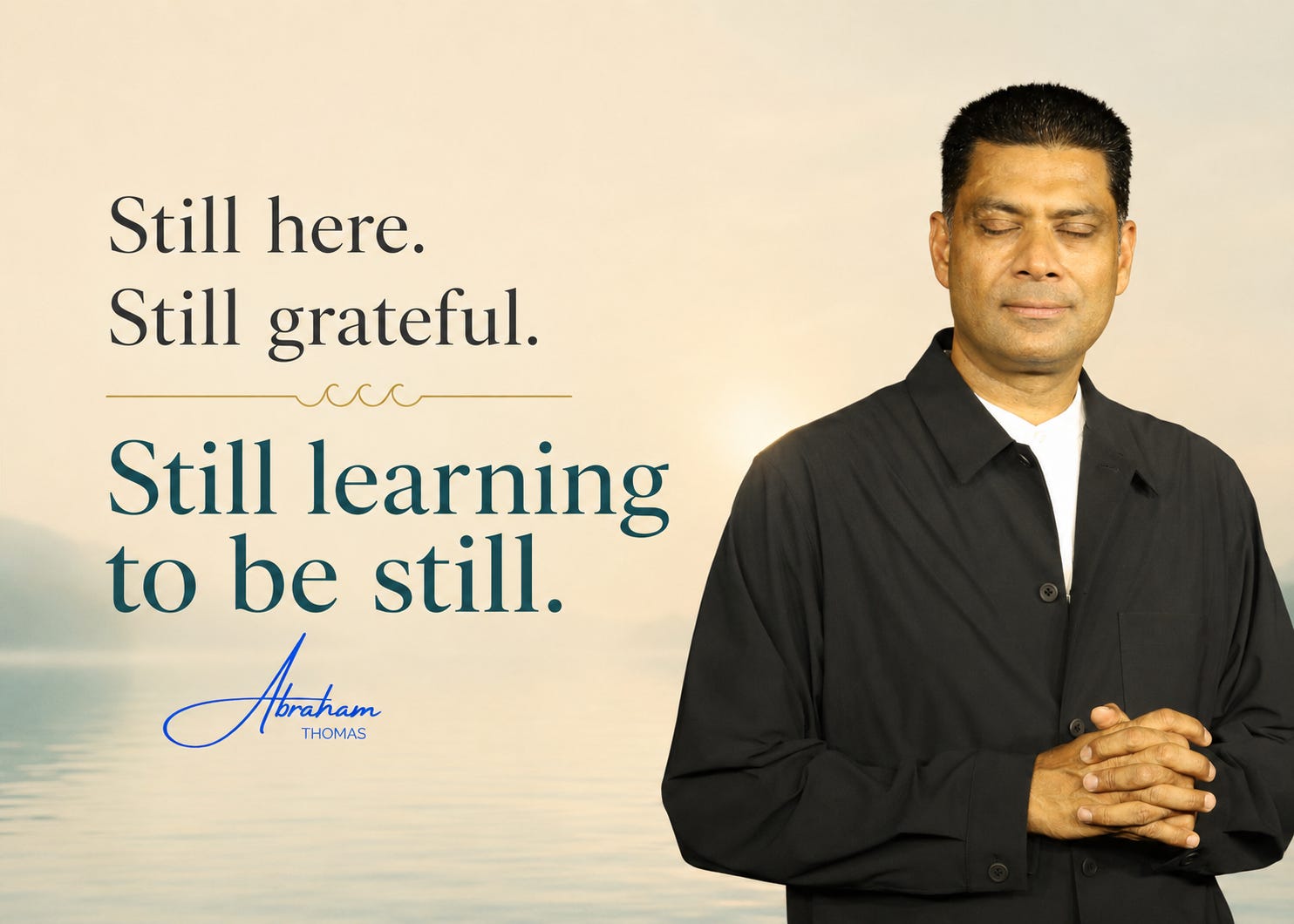
In my first letter, I wrote that I want less noise and enough stillness to listen to God.
After coming close to death, I wrote three short lines:
Still here.
Still grateful.
Still learning to be still.
The first two describe where I am. The third describes what I must learn.
Leaders are used to moving. We answer, decide, solve, carry, and keep things moving. The demands come with names, deadlines, and real consequences. Time with God does not scream for attention, so it is often the first thing we postpone.
Because people truly need us, stepping away can feel irresponsible. Sometimes guilt follows us into the quiet.
But if we wait until everything stops demanding our attention, we will never be still. The work will not finish itself and politely invite us to pray.
The Gospel of Luke tells us that news about Jesus was spreading and large crowds were gathering to hear Him and to be healed. Then comes a surprising sentence:
“But Jesus Himself would often slip away to the wilderness and pray.” The Gospel of Luke 5:16, NASB 1995
Often.
Jesus withdrew even while the crowds were gathering. Their needs were legitimate, yet He would not allow the urgency around Him to displace His communion with the Father.
His compassion was real, but the crowd’s urgency did not become His authority.
This is where many leaders lose their way. We confuse constant availability with faithfulness. When every demand receives equal authority, the loudest need begins to lead. We make decisions from pressure and answer from fatigue. We remain active, but our inner life slowly loses order.
Stillness is not an escape from responsibility. It keeps pressure from deciding what only God should direct.
The familiar command “Be still” comes from a psalm filled with upheaval. The earth changes, mountains shake, waters roar, and nations are in an uproar. In the middle of that noise, God says:
“Cease striving and know that I am God.” Psalm 46:10, NASB 1995
This is not a call to pretend the chaos is gone. It is a call to loosen our grip and remember who rules over it.
He is God. We are not.
For leaders, stillness must reach deeper than a quiet room. We can put the phone away and still carry every problem in our minds. Stillness begins when we release the quiet belief that everything depends on us.
I am responsible to be faithful. I am not responsible to be God.
That does not reduce our responsibility. It brings it back under God’s order. Stillness gives us room to distinguish what God has entrusted to us from everything that has reached for us.
You do not need a long retreat to begin. Protect a small piece of time. Put the phone out of reach. Open Scripture. Sit before the Lord without rushing to fill the silence.
Ask:
“Lord, what have You truly given me to carry today? What must I return to Your hands?”
Then stay there long enough to stop answering for Him. We are quick to bring God our questions and just as quick to supply His answers. Wait until He answers for Himself.
You may return to the same number of demands. But you can return with a clearer sense of what requires obedience, what can wait, and what was never yours to carry.
Longevity in leadership requires more than stamina. It requires the humility to stop before pressure becomes our guide.
You will never find time to be still. The demands will not make room for God.
You must.
So begin tomorrow morning. Before the day’s demands begin, protect ten minutes that belong only to God. Bring the two questions. Stay long enough to hear His answer.
The work needs your faithfulness. Your direction must still come from God.
P.S. If this letter met you in a busy week, pass it on to one leader who needs it.